MYSTRAL : survey in the Subantarctic waters
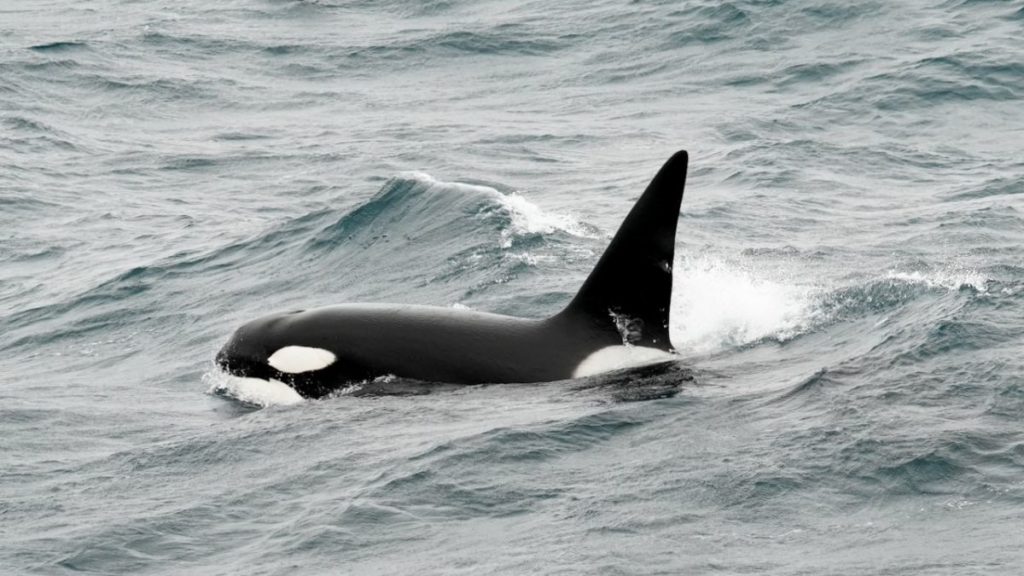
In February – March 2026, Globice, in partnership with the French Southern and Antarctic Territories (TAAF) and the French National Research Institute for Sustainable Development (IRD – MARBEC), conducted a joint survey in the subantarctic waters of Crozet and Kerguelen onboard the French fisheries patrol vessel, Osiris II (DMSOI). Five NeMMO volunteers and a bioacoustics researcher from Globice, a PhD student from IRD-MARBEC-CEBC, and a TAAF employee participated in the one-month campaign from 11 February to 12 March 2026, with the objective of monitoring cetaceans and other megafauna, with a particular focus on killer whales around Crozet Island for the TAAF / IRD – MARBEC – CEBC team. This first joint mission represented a rare opportunity to collect both visual and acoustic data in subantarctic waters of the Indian Ocean. Visual and acoustic observations were conducted throughout the entire mission, and biopsy samples were collected from killer whales around Crozet Island.
During the campaign, visual surveys were carried out over more than 224 hours, sometimes under rough sea conditions. This effort resulted on 61 cetacean sighting from 13 different species, including: pantropical spotted dolphin (Stenella attenuata, 3 sightings), striped dolphin (Stenella coeruleoalba, 1 sighting), bottlenose dolphin (Tursiops truncatus, 1 sighting), hourglass dolphin (Lagenorhynchus cruciger, 4 sightings), killer whale (Orcinus orca, 2 sightings), sperm whale (Physeter macrocephalus, 4 sightings), Layard’s beaked whale (Mesoplodon layardii, 2 sightings), southern bottlenose whale (Hyperoodon planifrons, 2 sightings), humpback whale (Megaptera novaeangliae, 4 sightings), sei whale (Balaenoptera borealis, 1 sighting), southern right whale (Eubalaena australis, 40 sightings), blue whale (Balaenoptera musculus ssp, 1 sighting), and one unidentified baleen whale. These observations confirm the richness of subantarctic waters and contribute to the existing NeMMO database.
In addition, a real-time acoustic survey was conducted using a towed hydrophone array, provided by WCS, allowing the collection of more than 565 hours of acoustic data. One hundred acoustic events were detected, including sperm whale clicks, delphinid whistles, killer whale vocalisations, and southern right whale gunshots. These acoustic detections complement the visual observations by revealing the presence of underwater animals that may otherwise remain undetected.
Autonomous hydrophones were also deployed off Crozet and Kerguelen Island as part of the MYSTRAL project and will be recovered next year. These will be analyzed to assess cetacean diversity through recordings of their acoustic presence, as well as the seasonal presence patterns of different species.
This successful mission highlights the value of combining logistical effort between projects to improve knowledge of these remote ecosystems, where cetacean distribution remains poorly understood, and to better assess the connectivity between subantarctic and tropical waters. It also provides valuable feedback for planning the next campaign, which will include hydrophone recovery and the deployment of satellite tags on humpback whales in the subantarctic region.
The MYSTRAL project led by Globice is founded by the European Union through the INTERREG IV Indian Ocean program.
Contributor : Emmanuelle Leroy